Reviewing XCOM for iOS
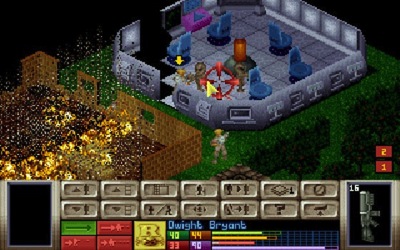
I bought a first-gen PlayStation a while after the platform had been out. The first while I owned it, I ran through the sorts of games that showed off what the hardware was good for: lots of eye candy, plenty of cut scenes, good use of the 3D hardware. About a year after I’d bought the machine, I walked into a mall toy store and found XCOM: UFO Defense – a port of the Microprose PC game – in the bargain bin for $9.99.
XCOM was the opposite of just about every other game I owned. It was turn-based, so there was no need for great reflexes. The graphics weren’t awful, but they looked a lot more like the bitmaps that had been brought over from a DOS game that they were. The sound effects were a little chintzy and repetitive. The game overcame all of that to create a really wonderful play experience.
XCOM is set in the near future, with Earth under attack by flying saucers. Game play is split into several discrete elements:
- Planetary defense: maintaining a network of bases and interceptors that can bring down UFOs as they appear in the sky
- Tactical combat: dispatching troops to downed UFOs and urban alien terror sites to battle the aliens using turn-based play
- R&D: Taking the weapons and technology recovered during battle to develop increasingly sophisticated weapons, armor and tech to battle the progressively tougher aliens
As a young gamer, I came up on tactical board games: Steve Jackson’s Ogre, Battlesuit and Car Wars were all pretty big favorites. I found Ogre in particular endlessly fascinating, because it was so simple – you could learn the rules by heart in a couple of 30-minute playthroughs – yet so suspenseful. There’s a giant, cybernetic tank bearing down on your command post and you’ve only got so many troops and machines to throw at it. Battlesuit was an infantry-only sequel to Ogre that focused on individual troops, and it introduced the idea of panic to game play: Units could be taken from your control as they responded to battlefield stress.
XCOM recreated the pace of old-school tabletop war games. You had as much time as you needed to make a move and planning was important. Since it was played with a computer, it was able to manage things like fog of war much better than a tabletop game. Successful play depended not only on tactical success, but progression on the tech tree.
Despite its deliberate nature, the game was incredibly suspenseful. Each soldier in the tactical sequences had only so many movement or action points, so careful and thoughtful play was rewarded. With a little planning, you could hope to recover from a misstep, but sometimes you’d send a troop around a blind corner only to have them gunned down; then you’d sit and watch the fog of war settle back over that part of the map, wondering what had just got your guy. Sometimes units would come under fire and spook, running around out of your control and shooting at their comrades in a blind panic. It was possible to not pack along enough ammo, leaving soldiers without enough bullets to fight or progressively working their way down to sidearms and hand grenades in desperation as engagements went too long. Thanks to decent atmospheric sound effects, there was a sense of dread, suspense and tension.
I think the game struck me a little harder at the time, too, because I was stationed at Ft. Bragg. The game rewarded things I’d learned in training, like disciplined fire control and measured tactical movement. I was my unit’s training and operations NCO, so I liked the logistical parts, too. I sort of identified with the little soldiers I was sending into battle.
XCOM was pretty good on the PlayStation, but as a port of a PC game it had a few interface issues a mouse would have handled with no problem. The PC version was easier to play. Both were a little clunky when it came to outfitting troops with the equipment they’d need with each engagement, right down to packing along enough ammo.
Despite its simple looks, deliberate pace and interface issues, XCOM remains one of my favorite games. Sadly, its DOS heritage made it harder and harder to play over the years, unless you were willing to fiddle with the setup a lot. It eventually went on the short list of games I stopped being able to play well before I was tired of them. I can’t think of many others, and having managed to get emulators working for games I thought I would love once again I’ve learned that nostalgia is a hell of a drug.
The Return of XCOM
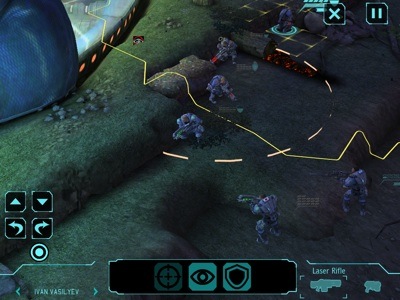
So, after a few lackluster sequels then years of practical unplayability on modern machines, XCOM returned to PCs in 2012 and Macs earlier this year. The new version uses 3d graphics for more visual polish, but the underlying gameplay is pretty faithful to the original: Intercept UFOs to keep member nations of the XCOM initiative happy enough to keep funding your work, battle aliens in turn-based combat at crash sites and in cities, research alien tech to build more capable weapons and armor.
Some things are simplified. Soldiers are easier to outfit and you don’t have to manage ammo. Without the logistical burden, there’s no more “forgot to pack along enough ammo” frustration. Soldiers also specialize and gain abilities over time to make them more useful. Some become more proficient at combat medical stuff, some become better at close-in combat, some gain the ability to lay down suppressing fire with heavy weapons, some develop proficiency as snipers. As soldiers move up the ranks, the size of squads you can send into combat grows, too.
I imagine there are some who have been nursing along an original version of XCOM all these years, and I suspect some of those folks will not like this version for any number of differences I will have missed having not played the game for years. In some ways, I think the new XCOM was designed for people like me, who might remember the game with a lot of fondness but don’t remember a ton of low-level details: It feels streamlined and pared down. Some might read that as dumbed down, but I think the tradeoffs are acceptable. Yeah, it’s not as “realistic” to have troops with bottomless clips, but the gameplay moves along a little better.
Still, as happy as I was to have a playable version of XCOM again, I was a little disappointed just because I really don’t like playing games on desktop machines. It involves blocking out big chunks of time alone in my office, and since I’ve been working away from home again I don’t like being closed off from the family like that.
So last week, when the iOS version of XCOM came out, I ignored the relatively high $20 price tag and bought it on the spot: I might not have a lot of play time at home, but I’ve got an hour a day on the Max.
XCOM iOS
In terms of basic gameplay, the iOS port of XCOM is pretty much the exact same game as the desktop version, and it works very well as a mobile game. The turn-based play makes it easier to briefly set the game aside, and the move to touch-based interaction is pretty clean. In some ways, the iOS version has better controls than the desktop version. You can pretty much read my notes on old-school XCOM and desktop XCOM and apply them to the iOS version, which works on both the iPad and iPhone (though the iPhone controls feel a bit fussier because they’re very small and sometimes hard to hit with a fingertip).
There are some things I would definitely change about the mobile version, though.
First, there are a few lengthy cut scenes you just have to sit through. They’re designed to provide context and background to the game, but they’re really, really frustrating when you’re just trying to squeeze in ten or fifteen minutes of play, especially if you have to leave the game and come back, only to have the cut scene restart. There’s no way to tap through them, either. So if you’re the sort of player who runs through a game on progressively harder levels of difficulty, or if you like to restart now and then to apply what you’ve learned from games that don’t end so well, you have to sit through them each and every time.
There’s also some really, truly gratuitous interface clutter in the form of swooping, panning 3D effects when you’re trying to conduct research or other management tasks at the home base. You can’t just pick an area to work on (e.g. setting up research), you have to swoop around from room to room with sometimes painfully slow transitions. Rather than being allowed to “just play,” you have to endure eye candy that doesn’t really contribute to the experience. It feels inconsiderate. Some of this may be to mask load times as you move from area to area, but I think I’d be happier with a simple spinner and a little latency. The spinner says “getting there as fast as we can,” the transition effects say “getting there, but first sit through our designer being a little indulgent.”
Despite those issues, I’ve been playing the hell out of the game. It feels exactly like what I’ve been pining for since I stopped being able to easily run the original. I think it’s my favorite iOS game since the lovely Waking Mars. Super recommended for anyone who likes tactical gaming.
#iOS #xcom